
What is Dedicated Internet Access (DIA)?
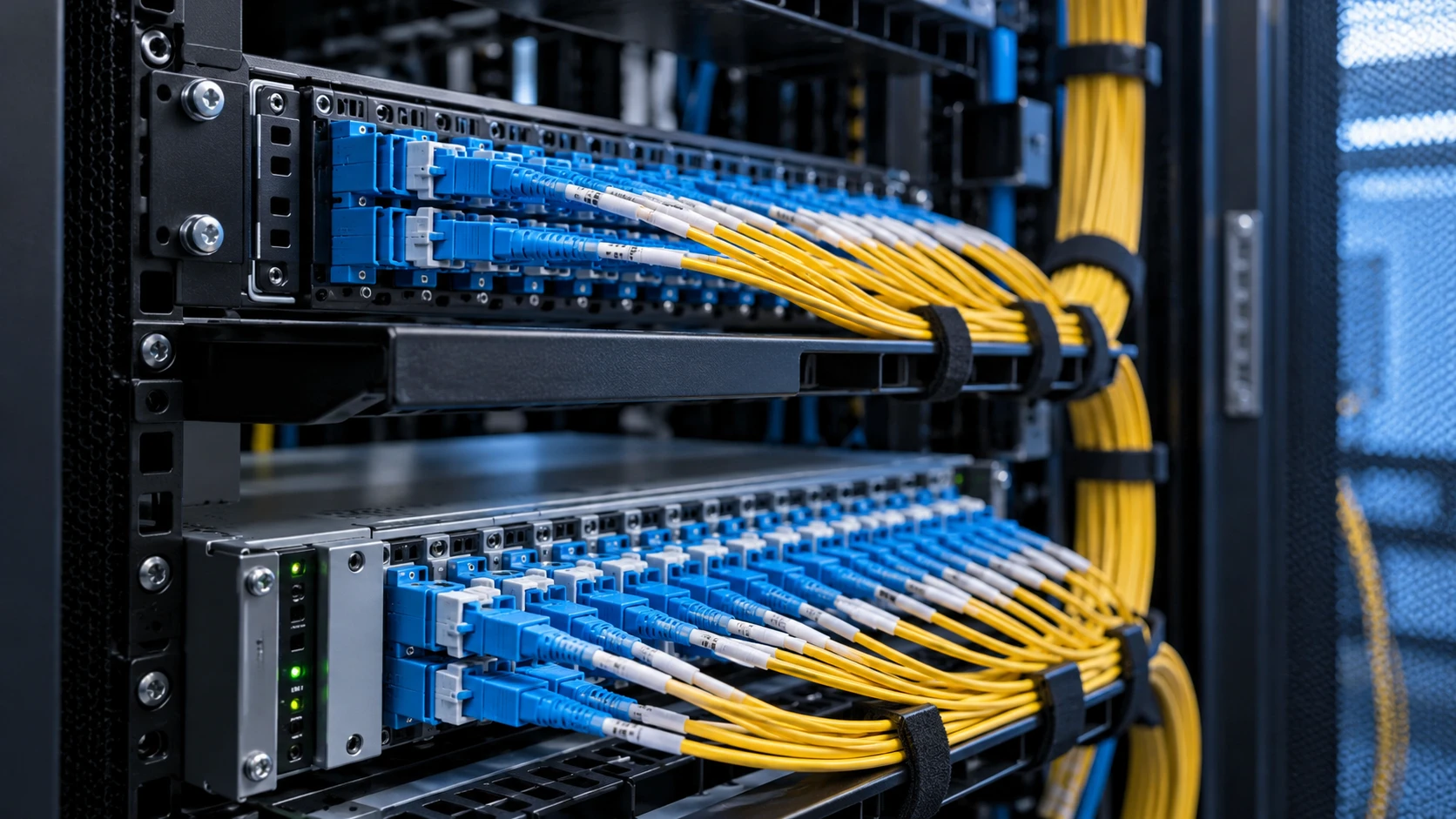
Dedicated Internet Access (DIA) is a business internet service with bandwidth reserved for one customer. It normally uses a leased line to connect your premises to an internet service provider, giving you a committed speed that is not shared with neighbouring broadband users.
A typical DIA service is symmetrical, so its upload and download speeds are the same. It also comes with business-grade fault support, a service level agreement (SLA) and one or more static public IP addresses. That makes its performance and support more predictable than ordinary business broadband.
What does “dedicated” actually mean?
With shared broadband, several customers use common access and provider capacity. The available speed can therefore vary as demand changes. With DIA, the provider commits the contracted access bandwidth to your service. A 500 Mbps DIA service should make 500 Mbps available for both upload and download, subject to the contract and your own equipment.
Dedicated does not mean that a private cable runs all the way to every website you visit. The access circuit and contracted capacity into the provider are reserved for you, but the provider's core network, peering links and the wider internet still carry traffic for many organisations. The SLA usually applies only to the parts of the service the provider controls.
How is DIA delivered?
A DIA service normally contains several components:
- An access circuit: usually fibre Ethernet from your premises to the provider's network.
- Internet connectivity: routing from the provider's network to the public internet.
- Customer equipment: a router, and often a separate firewall, at your premises.
- IP addressing: typically a static public IPv4 allocation, with IPv6 available from some providers.
- Monitoring and support: fault handling and performance commitments defined by the SLA.
The physical access can be supplied over a carrier's own fibre or a wholesale circuit such as Openreach Ethernet Access Direct (EAD). The provider combines that circuit with internet transit, IP addresses, support and any managed equipment to create the finished DIA service.
Is DIA the same as a leased line?
The terms are often used interchangeably, but they describe slightly different things. A leased line is a dedicated data connection between two fixed points. It can carry internet access, connect two offices, or provide access to a private WAN or cloud network.
DIA describes the internet service delivered over that dedicated connection. In everyday UK sales language, “DIA” and “internet leased line” normally refer to the same finished product. A point-to-point leased line without public internet routing is not DIA.
DIA compared with business broadband
- Bandwidth: DIA provides a committed rate; broadband is a shared, best-efforts service.
- Upload speed: DIA is normally symmetrical; broadband frequently has a slower upload speed.
- Fault support: DIA usually has 24/7 fault reporting and a fix-time target measured in clock hours; standard broadband repair is often measured in working days.
- Installation: DIA is surveyed and may require new fibre construction; broadband normally uses an existing access network.
- Price: DIA costs more because it includes dedicated capacity, higher service levels and a bespoke access circuit.
Full-fibre broadband can advertise the same headline speed as a leased line, but that does not make the services equivalent. A 1 Gbps FTTP package and 1 Gbps DIA can differ substantially in upload speed, committed bandwidth, fault response and availability guarantees.
Port speed, bearer size and committed bandwidth
A DIA quotation may show both a bearer and a committed bandwidth. The bearer is the maximum capacity of the installed circuit or port. The committed bandwidth is the speed enabled and guaranteed under the contract.
For example, a provider might deliver 200 Mbps on a 1 Gbps bearer. You receive 200 Mbps initially, while the larger bearer can make a future upgrade easier because the physical circuit may not need replacing. It does not mean that unused capacity up to 1 Gbps is available unless the contract explicitly includes bursting.
What does the SLA cover?
DIA contracts usually define a target availability and a target time to repair a qualifying fault. Some also commit to network latency, packet loss or jitter within the provider's network. The exact figures, measurement points, exclusions and compensation vary, so the word “SLA” is not enough on its own.
Before ordering, check:
- Whether the repair time is a target or a contractual guarantee.
- Whether it runs in clock hours or only during the working day.
- Where the provider measures availability and performance.
- Whether the router, firewall and internal cabling are included in the supported service.
- What service credits apply and how they must be claimed.
Does DIA provide resilience or security?
One DIA circuit is still one physical path. A fibre break, failed router, power cut or provider outage can disconnect the site. Businesses that cannot tolerate downtime should use a separately designed backup service and verify its duct route, carrier, exchange, provider core and customer equipment. Our guide to true network resiliency explains the shared risks to check.
DIA is not a firewall either. A dedicated access circuit avoids sharing its contracted bandwidth with other access customers, but it still connects your network to the public internet. You need appropriate firewalling, software updates, access controls and, where the risk justifies it, DDoS protection.
Who needs Dedicated Internet Access?
DIA is worth considering when a business:
- Depends on cloud applications, VoIP or video meetings throughout the working day.
- Moves large files, hosts services or performs substantial cloud backups.
- Needs predictable upload as well as download performance.
- Would lose significant revenue or productivity during a broadband fault.
- Needs static IP addresses, provider-managed routing or stronger service commitments.
A small office using email and web applications may be better served by well-managed business FTTP with a backup connection. The right choice depends on the cost of downtime and poor performance, not simply the number of employees.
What should you compare in a DIA quote?
- The committed upload and download bandwidth.
- The bearer size and cost of future bandwidth upgrades.
- The access carrier and the technology used to reach your premises.
- The estimated installation charge, survey process and delivery timescale.
- The SLA, support hours and exact fault escalation process.
- The number of public IP addresses and whether IPv6 is supported.
- Whether the router, firewall, monitoring and DDoS protection are included.
- The design and independence of any backup or resilient circuit.
Two quotes with the same speed can represent very different services. Compare the complete design and the supplier's responsibility when something fails, rather than choosing on monthly rental alone.
If your premises are in the North East, our page on leased lines in Newcastle lists the networks we compare for each address.