
What is Openreach Ethernet Access Direct (EAD)?
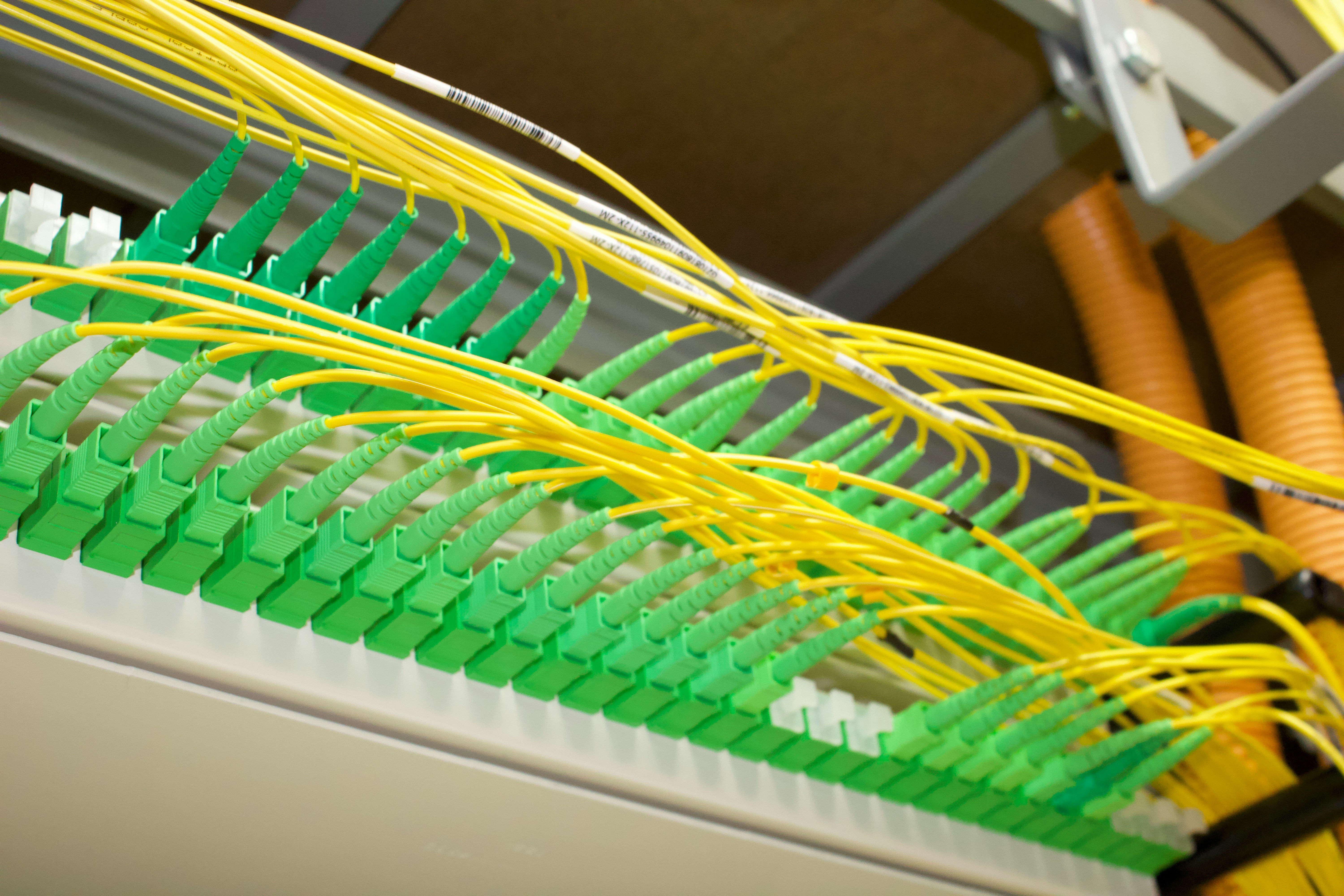
Openreach Ethernet Access Direct (EAD) is a wholesale, point-to-point Ethernet service. It provides a permanently connected, uncontended fibre path between two locations, with Openreach supplying and managing the network terminating equipment (NTE).
Communications providers use EAD to build leased lines, connect customer sites to their networks and create site-to-site links. The end customer buys the finished service from a provider rather than ordering EAD directly from Openreach.
Standard EAD bandwidth variants
Openreach offers four standard EAD bandwidths:
- EAD 10: 10 Mbps.
- EAD 100: 100 Mbps.
- EAD 1000: 1 Gbps.
- EAD 10000: 10 Gbps.
The connection is symmetrical, so the selected bandwidth is available in both directions. Unlike shared broadband, the Openreach access circuit is dedicated to that service and has no usage allowance.
Maximum EAD distances
Openreach uses two measurements when deciding whether an EAD circuit is within reach:
- Radial distance: the straight-line distance between the relevant locations.
- Route distance: the length of the physical fibre route installed through the network.
Standard EAD supports a maximum radial distance of 25 km and a maximum physical route distance of 40 km.
Extended Reach is available for the 10 Mbps, 100 Mbps and 1 Gbps variants. It increases the maximum radial distance to 45 km and the maximum route distance to 86 km. EAD 10 Gbps does not have an Extended Reach variant, so its limits remain 25 km radial and 40 km routed.
What is EAD Rugged?
EAD Rugged 1G is a 1 Gbps, full-duplex EAD service for street furniture and other locations where normal indoor telecoms equipment would be unsuitable. Its hardened remote NTE is designed for non-environmentally controlled locations such as roadside cabinets, lamp posts, CCTV installations and mobile-network infrastructure.
EAD Rugged supports a maximum radial distance of 25 km and a maximum route distance of 40 km. The word “rugged” describes the equipment and operating environment; it does not mean the fibre follows a resilient or physically diverse route.
How main-link distance works
Each end of an EAD circuit is associated with a fibre-serving exchange. If the two ends use different exchanges, the connection between those exchanges is the main link. Openreach applies a recurring main-link rental based on the radial distance between the serving exchanges, charged per metre, rather than the actual fibre route chosen by its planner.
EAD Local Access terminates at the local fibre-serving exchange and does not include a main link. A standard end-to-end EAD or non-local EAD Rugged circuit can attract a main-link charge, so two apparently similar addresses can produce different rentals depending on their serving exchanges.
Provision lead time
Openreach's standard EAD provision lead time is 30 working days, subject to survey and deemed consent. This is a product lead time, not a promise that every leased line will be live within six weeks.
New duct, blocked infrastructure, fibre build, traffic management, wayleaves, excess construction charges or delays preparing the customer site can extend delivery. The communications provider may therefore quote a longer end-to-end lead time until the survey and committed delivery date are confirmed.
Fault clearance
Openreach publishes a five-clock-hour target fix for EAD faults. The clock-hour basis means the repair target is not limited to the normal working day, but it remains a target rather than a guarantee that every fault will be cleared within five hours.
The service sold to the customer is managed by the communications provider, whose own SLA may cover fault diagnosis, customer equipment and escalation as well as the underlying Openreach circuit. Check the provider's contract to understand the complete service commitment.
For North East sites, our page on leased lines in Newcastle shows how we compare EAD circuits from several providers with other networks.
EAD and network resilience
One EAD circuit is still one physical path. Openreach resilience options can add a second fibre path, but true resilience also depends on duct routes, exchanges, backhaul, provider core networks, customer routers and power. Read our guide to achieving true network resiliency before treating a second leased line as fully diverse.